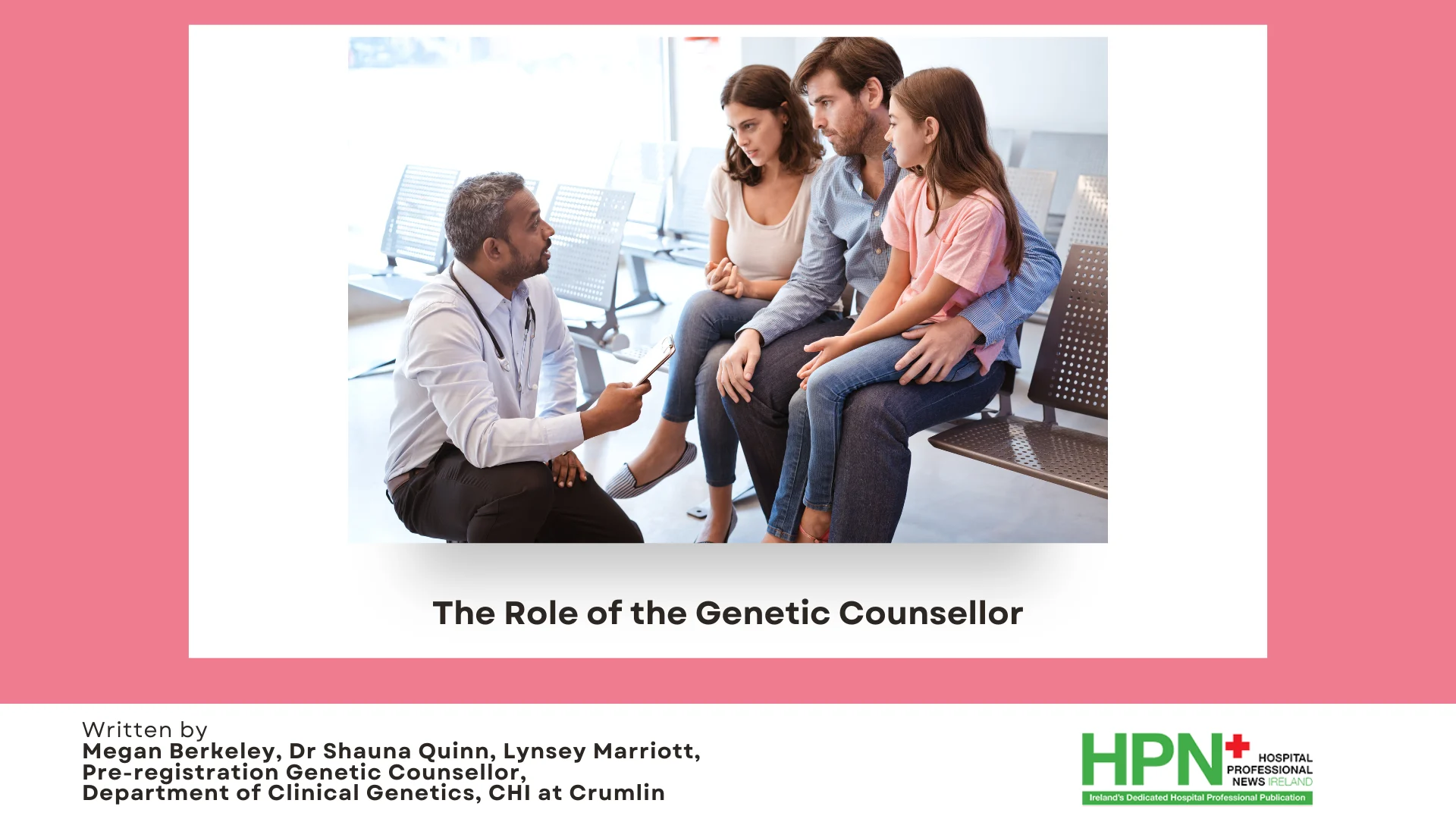
Genetic Counsellors are a specialised group of healthcare professionals trained in genomic medicine and counselling skills. The role involves supporting individuals and their families to understand and adapt to a diagnosis of a genetic condition, facilitate the genetic testing process, and guide ongoing care according to a patient’s specific needs. Genetic counsellors can offer a unique perspective as advocates for individuals under their direct care as well as for those in the wider family, which can involve managing highly complex situations and ethical challenges.
Genetic counsellors have traditionally worked as part of a Clinical Genetics service, alongside Clinical Geneticists, Scientists, other Healthcare Professionals, and Administrative Staff. In recent years, increased genetic testing is being offered in non-genetics specialities, known as “mainstreaming”, which is changing how patients and clinicians encounter information about genetic risks and the implications of inherited conditions. Genetic counsellors are therefore taking on more specialised roles in a range of settings, including oncology, cardiology, and prenatal care, as well as promoting education of the workforce to ensure patients are being provided with accurate information and appropriate support at each stage of their healthcare journey.
For verified healthcare professionals
Log in or register for free to read this article. HPN is for healthcare professionals, so new accounts are verified by our team.