
New Cancer Dashboard for Ireland highlights urgent priorities for next National Cancer Strategy
New report highlights priorities for the next National Cancer Strategy amid growing pressure on Ireland’s cancer system
- Survival rates up from 43% to 65% over two decades, but rising incidence and capacity constraints mean progress cannot be taken for granted
- New Cancer Dashboard for Ireland report sets out priorities for the next National Cancer Strategy, calling for clear targets aligned with EU standards and sustained, multi‑annual investment across cancer care
- Report highlights the need to strengthen prevention, early detection, diagnostics, access to treatments, workforce and data infrastructure to meet growing demand
Dublin, May 19th: The Swedish Institute for Health Economics (IHE) are today presenting the Cancer Dashboard for Ireland, a report commissioned and funded by MSD, offering an evidence-based picture of how cancer care in Ireland is performing and where further progress is needed. The report shows Ireland must act decisively to strengthen cancer prevention, early detection, diagnostics, workforce capacity and research integration if it is to build on recent improvements in survival rates and meet growing demand.
Cancer remains the leading cause of death in Ireland, responsible for almost a third of all deaths nationally. In 2022 alone, 25,540 new cancer cases were diagnosed with cancer incidence continuing to rise year-on-year and increasing pressure across the health system.
With Ireland due its next National Cancer Strategy for 2027 – 2036, the Cancer Dashboard for Ireland report findings come at a critical moment for policymakers. The analysis shows that without decisive action on prevention, early detection, diagnostics, workforce capacity, data infrastructure and access to research, Ireland risks stalling hard won gains in cancer survival at a time when demand on services continues to grow.
The report remarks on early detection as a critical challenge. While participation in national screening programmes is one of the most effective levers for improving outcomes, uptake in Ireland during the period studied remains uneven:
- Breast cancer screening participation stands at 70%, above the EU average but below leading countries such as Denmark.
- Cervical screening coverage has reached 75%, short of the national 80% target, with significant regional variation.
- BowelScreen participation remains lower again at 46%, with particularly low uptake among first time invitees and men.
Challenges also persist in diagnostics and precision medicine. While Ireland has made progress in building genomics infrastructure, access to advanced biomarker testing using next generation sequencing remains fragmented. Ireland’s availability of CT, MRI and PET scanners, during the period studied, is approximately 23% below the EU average, raising concerns about timely diagnosis and system capacity as demand continues to grow.
The report findings also importantly point to a cancer system that remains unevenly configured, with experience and outcomes continuing to depend on where and how patients enter the system. The Dashboard highlights persistent variation across care pathways, reflecting differences in capacity, integration and coordination between services and centres. While progress has been made in recent years, the report underlines that greater consistency in national planning and delivery will be essential if Ireland is to sustain and build on improvements in cancer outcomes over the next decade.
One area where this variation is particularly evident is clinical trials. The Dashboard identifies trials as a critical but underdeveloped pillar of Ireland’s cancer system. While participation in trials can offer patients earlier access to innovation and strengthen clinical learning and research excellence, access to clinical trials in Ireland remains inconsistent, limiting their role as an integral part of routine care and with Ireland trailing behind comparable European countries in this area.
The report points to this as a missed opportunity and calls for more consistent national integration of trials into care pathways, alongside stronger leadership and better leveraging of existing EU funding mechanisms to expand participation and capacity.
The analysis also points to workforce pressures as a growing risk. Although consultant numbers have increased in recent years, Ireland continues to have fewer specialist physicians per capita than the EU average, and nearly half of consultant posts take more than 18 months to fill during the period studied. These pressures, combined with rising cancer incidence, risk undermining timely access to care. In addition, access to innovation is also identified as critical during the period studied, with only 25% of EMA approved cancer medicines from 2020 to 2023 had been reimbursed in Ireland, as of January 2025, the lowest rate in Western Europe.
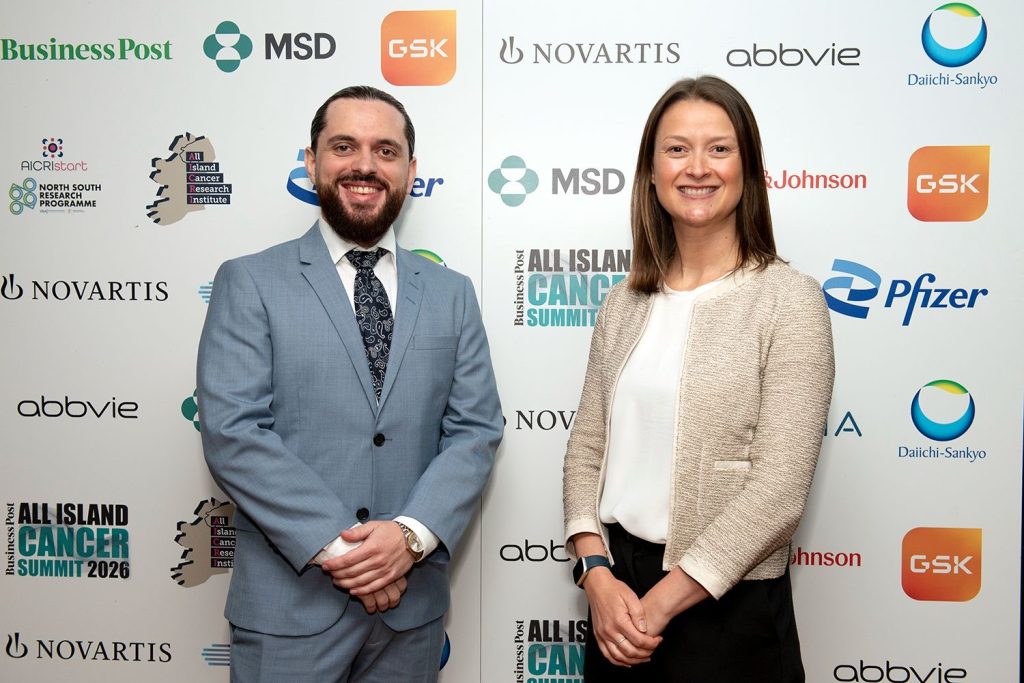
The Cancer Dashboard for Ireland is being presented at the All-Island Cancer Summit, hosted by the Business Post in collaboration with the All-Island Cancer Research Institute. It provides a comprehensive, evidence-based assessment of Ireland’s cancer system across the full care pathway, from prevention and screening to treatment, survivorship and research.
Speaking on the report, Samantha Humphreys, Managing Director of MSD Ireland Human Health, said: “Cancer outcomes in Ireland have improved significantly, but this report makes it clear that progress cannot be taken for granted. With cancer now accounting for almost a third of all deaths nationally [1], we need a new National Cancer Strategy that is ambitious, properly resourced and focused on everything from prevention and timely diagnosis to capacity and access to treatments. That includes strengthening diagnostics and clinical trials capability across the country so more patients can access innovative cancer therapies. Collaboration across the health system will be critical as we shape Ireland’s next cancer strategy for the next decade.”
Bardh Manxhuka, Health Economist at the Swedish Institute for Health Economics and lead co-author of the report, said: “This dashboard provides a clear, data driven picture of Ireland’s cancer system. Survival has improved substantially, but rising incidence, workforce constraints and delays in access to innovative cancer medicines risk slowing future gains. Addressing these gaps now through targeted investment and clear priorities offers an opportunity to deliver better outcomes for patients and greater value for society.”
Prof. William Gallagher at the All-Island Cancer Research Institute said: “This report highlights both the progress Ireland has made in cancer care and the real challenges that remain ahead. While outcomes have improved, Ireland continues to lag behind comparable European countries. Addressing these gaps will be essential if we are to deliver equitable, high quality cancer care for all patients and ensure the next National Cancer Strategy is grounded in evidence as well as a long-term, sustainable system that’s designed for today and for the future.”
Nikki Gallagher, Chief Executive at the Irish Cancer Society, said: “Behind every statistic in this report are people and families who continue to feel the impact of cancer every day. Improving outcomes is not just about survival, but about ensuring patients can access diagnosis, treatment, clinical trials and support services in a timely and equitable way. This report is a reminder that progress must be felt at patient level, and that the next phase of cancer reform must put access, consistency of care and patient experiences at its heart.”
The Cancer Dashboard for Ireland forms part of the IHE’s wider European Cancer Dashboards initiative, designed to support policymakers by translating complex data into practical insights that guide cancer planning, prioritisation and reform across Europe.
The report sets out a series of high-level recommendations to support the next phase of cancer policy in Ireland as the current National Cancer Strategy concludes. These include expanding screening age ranges in line with EU recommendations, strengthening targeted outreach to underserved groups, accelerating the rollout of digital health records to improve data transparency and decision making, bolstering cancer workforce capacity and ensuring timely, equitable access to effective cancer medicines and diagnostics.