Written by Sinead Maguire, Department of Rheumatology, St James’s Hospital Dublin/School of Medicine, Trinity College Dublin; Dr Fiona Wilson, Associate Professor, Physiotherapy, Trinity College Dublin; Phil Gallagher, Department of Rheumatology, St Vincent’s University Hospital & Finbar D O’Shea, Consultant Rheumatologist, St James’s Hospital Dublin/School of Medicine, Trinity College Dublin
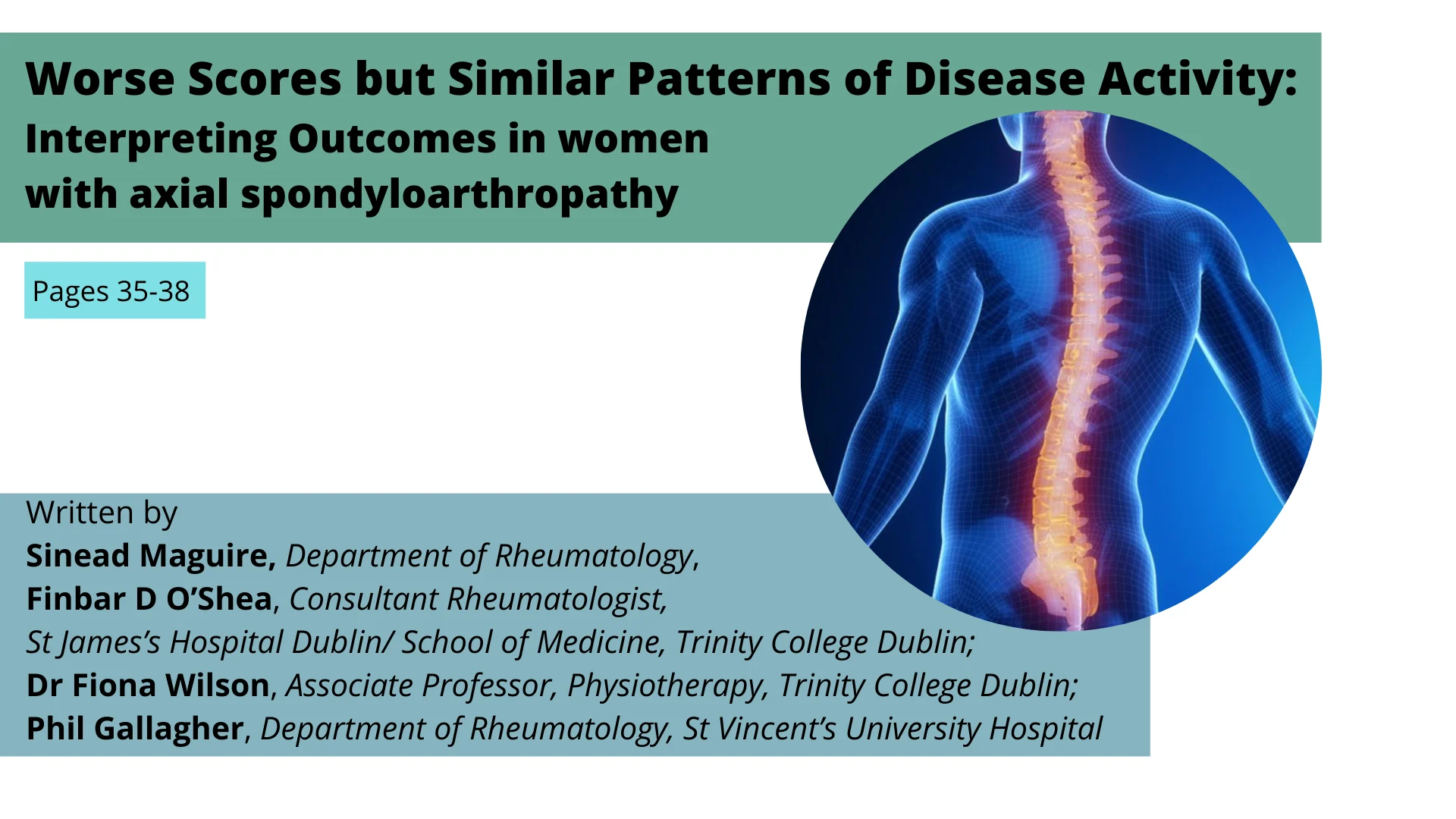
Axial spondyloarthropathy (axSpA) is an autoinflammatory arthritis predominantly involving the axial spine. 1 The defining feature is inflammatory sacroiliitis, which can be detected on X-ray in radiographic axial spondyloarthropathy (r-axSpA), or on magnetic resonance imaging (MRI) in non-radiographic axial spondyloarthropathy (nr-axSpA). 2 This causes symptoms of inflammatory back pain such as nocturnal pain and prolonged early morning stiffness (EMS). Several articular and extra-articular manifestations (psoriasis, inflammatory colitis, and uveitis) are recognized, which can aid in clinical identification of axial spondyloarthropathy. Onset is typically in the third decade, with a higher incidence in Caucasians and an association with human leucocyte antigen (HLA)-B27. 3
For verified healthcare professionals
Log in or register for free to read this article. HPN is for healthcare professionals, so new accounts are verified by our team.