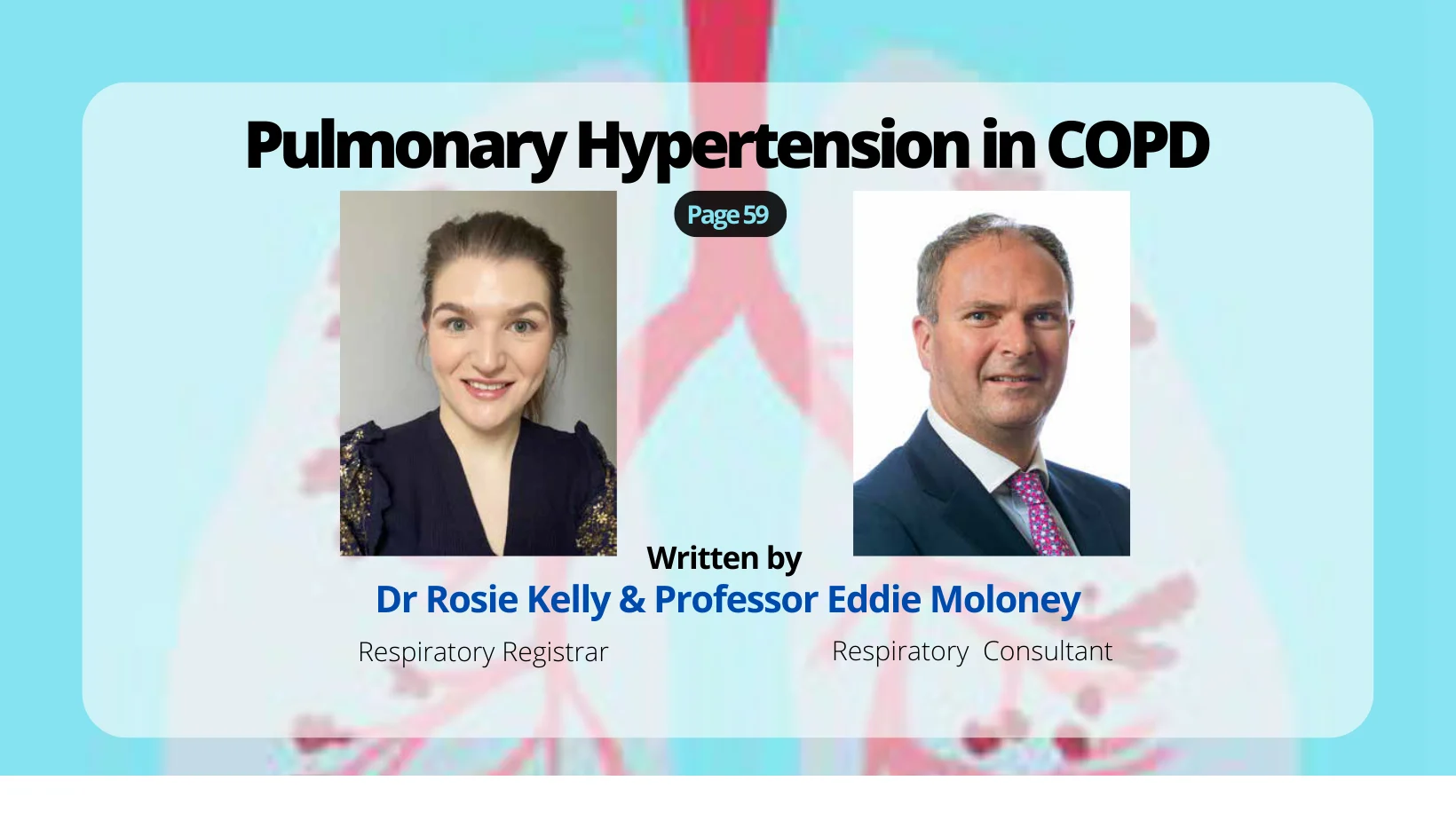
Written by Dr Rosie Kelly, respiratory registrar and Professor Eddie Moloney, respiratory consultant Tallaght university hospital
Chronic obstructive pulmonary disease (COPD) is a common, preventable, treatable disease that is characterised by persistent respiratory symptoms and airflow obstruction, usually caused by smoking. Approximately 10 percent of individuals aged 40 years or over have COPD, with estimates of over 500,000 people in Ireland having COPD, most undiagnosed and half of whom have moderate to severe disease, and prevalence increases with age. Disease course can vary from exertional breathlessness to progressive severe exacerbations requiring hospitalisation. COPD is diagnosed using spirometry with a measurement of forced expired air in one second (FEV1) over forced vital capacity (FVC), the total volume of air expelled in a forced effort. A persistent obstruction in airflow will result in FEV1/FVC ratio of < 70 percent with. FEV1 also used to measure the severity of disease. Pulmonary function testing in a pulmonary laboratory allows for measurement of lung volumes (air trapping and hyperinflation pattern usually seen in COPD) and diffusion capacity for carbon monoxide (DLco) between lung alveoli and pulmonary capillaries. DLco is usually reduced in COPD as a complication of alveolar destruction due to emphysema and maladaptive pulmonary vascular changes which result in pulmonary hypertension.
For verified healthcare professionals
Log in or register for free to read this article. HPN is for healthcare professionals, so new accounts are verified by our team.