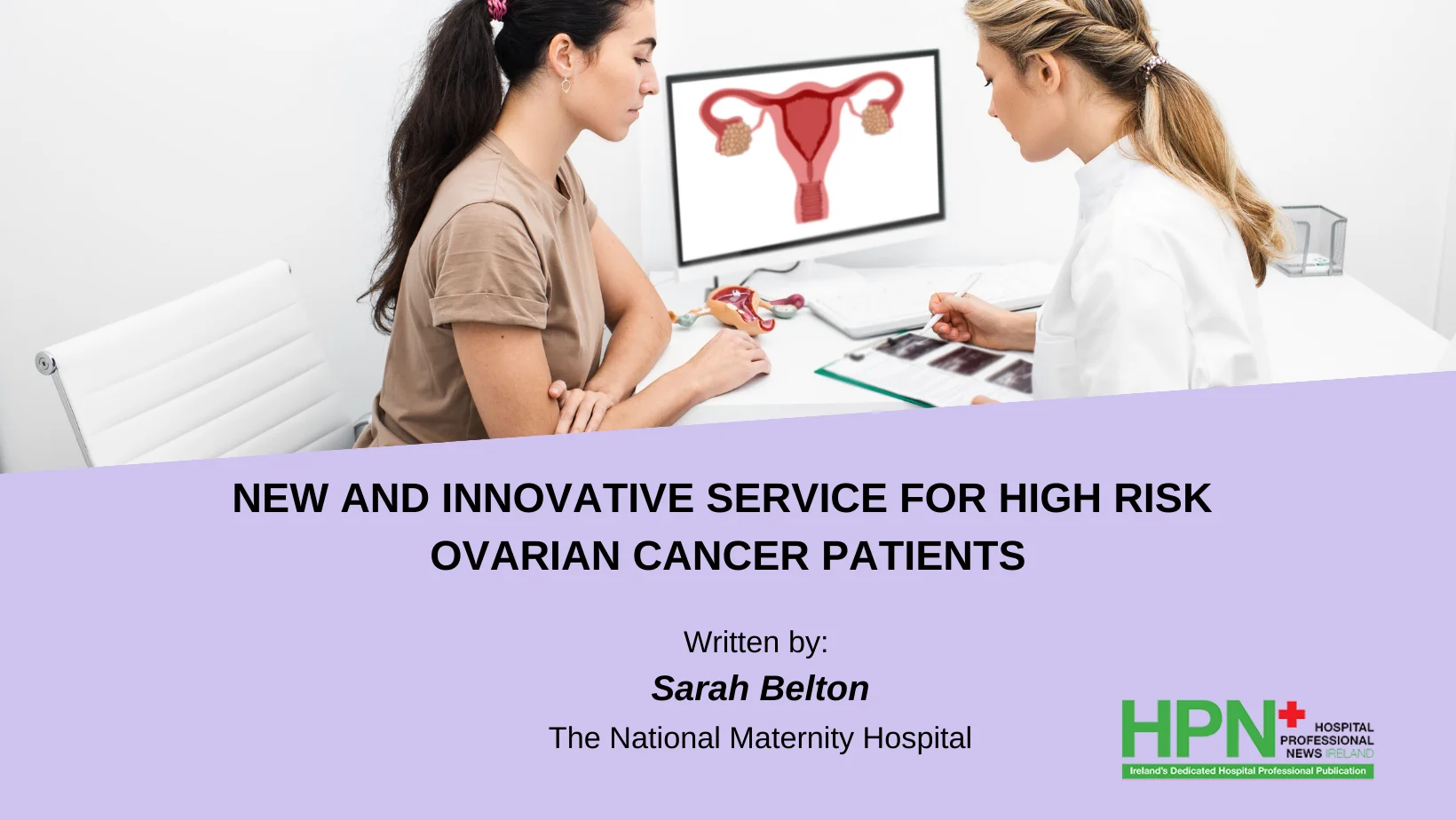
The Advanced Nurse Practitioner led Gynaecology Oncology: Family History Clinic is a new, innovative approach to the care of women with BRCA 1 and BRCA 2 germline alterations to manage their ovarian cancer risk reduction strategy. The new service established at The National Maternity Hospital and St Vincent’s University Hospital prioritises prevention of ovarian cancers in these patients, through risk reduction surgery. However, this is a complex issue for pre-menopausal women as it affects fertility and, surgery results in menopause.
Recent Irish research has established that information needs are important to women with BRCA (NCCP, 2023; Warner and Groake, 2022). In its Hereditary Cancer Model of Care document (2023), the National Cancer Control Programme describe the provision of accurate, consistent information as a key theme from research carried out with this patient group. Warner and Groake (2022) found that patients were disempowered by dealing with high levels of uncertainty in their care following BRCA diagnosis, as a result of inconsistent information given by different health care professionals. The NCCP (2023) also states those with a genetic predisposition to ovarian cancer should have access to clear information regarding the symptoms of surgical menopause and longer term health risks associated with this prior to surgery and, that patients should have access to expert, individualised advice regarding their options for menopause management (NCCP 2023). A recurrent theme from national and international literature is that women do not regret undertaking risk reducing salpingo-opherectomy but repeatedly highlight a lack of information sources particularly around the long term impact of prophylactic surgery in a variety of areas including fertility, menopause (and the use of hormone replacement therapy) bone health, cardiovascular risk and cognitive protection.
For verified healthcare professionals
Log in or register for free to read this article. HPN is for healthcare professionals, so new accounts are verified by our team.