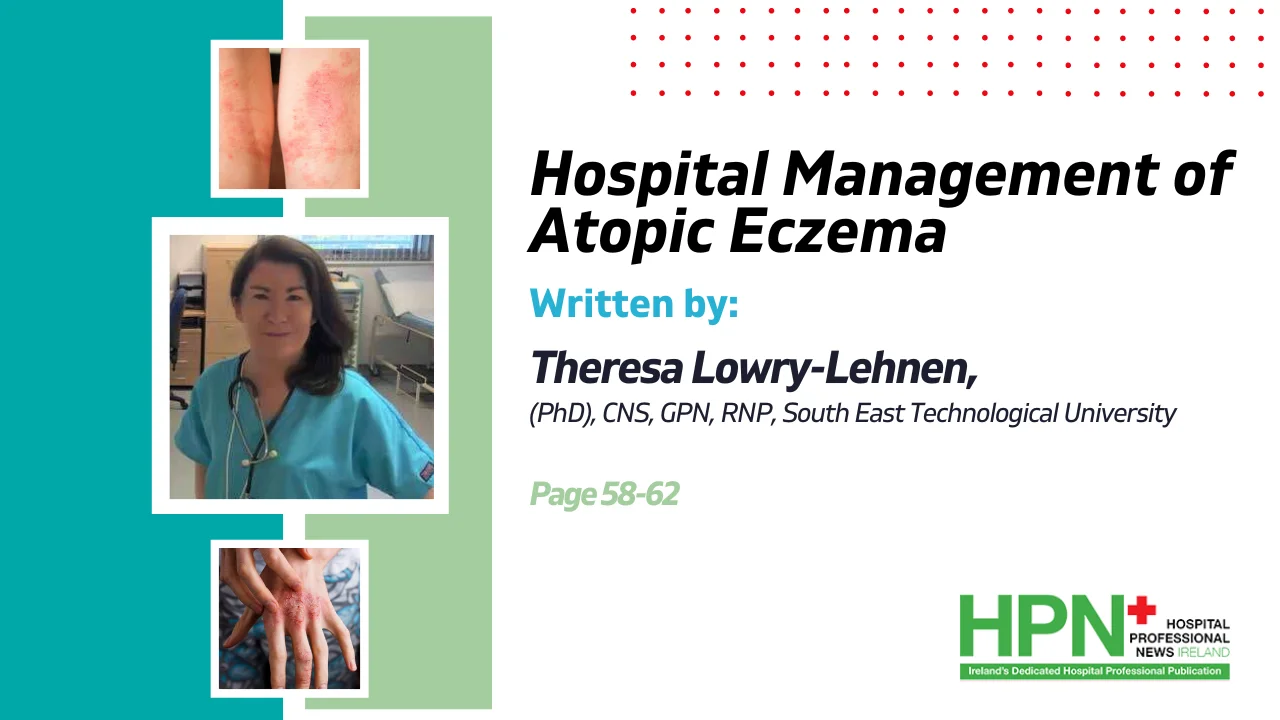
Atopic eczema (AE) also known as atopic dermatitis is a chronic, inflammatory skin disorder characterised by intense itching, dry skin and recurrent erythematous lesions, which usually develops in early childhood. The causes remain unclear, but are multifactorial in nature, involving genetic, socioeconomic, and environmental factors. It can run in families, and often develops alongside other atopic conditions such as asthma and allergic rhinitis. The prevalence of AE in adults is about 1%-3%, and 10%-20%, in children. It affects approximately 1 in 5 children and 1 in 12 adults in Ireland. 13 Although it can present at any age, up to 85% of patients with AE are symptomatic before 5 years of age. The condition is mild in up to 80% of patients; however, it can have a significant negative impact on an individual’s quality of life due to itch, sleep deprivation and social embarrassment.
Atopic eczema causes areas of skin to become itchy, dry, cracked, red and sore. It can occur all over the body, but is most common on the hands especially the fingers, insides of the elbows or backs of the knees, and the face and scalp in children. Severity can vary from person to person and although it generally presents as an episodic disease with repeated flare-ups, it can also be continuous. People with mild eczema may only have small areas of dry skin that are occasionally itchy. In more severe cases, atopic eczema can cause widespread red, inflamed skin all over the body and constant itching. 2, 3
For verified healthcare professionals
Log in or register for free to read this article. HPN is for healthcare professionals, so new accounts are verified by our team.